GD STAR AUTO · PROCUREMENT & EXPORT
Chinese Brands: Premium or Mainstream Used Cars — How to Choose
How Chinese premium and mainstream used cars differ on price, comfort, performance, resale value and repair cost, and which suits which buyer.
Updated:
Chinese Brands: High-End Vehicles or Mass-Market Used Cars—How to Choose
Updated: November 25, 2026
In the first half of 2026, China’s automobile exports reached 5.096 million units—a 65.3% year-on-year increase. Of this total, electric vehicle (EV) exports accounted for 2.355 million units, roughly double the figure from the same period the previous year. Source: Data from the China Association of Automobile Manufacturers (CAAM) https://www.ex1000.com/en/news/2135
In terms of export value, the first half of the year saw approximately $91.8 billion in exports, a 54% year-on-year increase. Regardless of consumer perceptions, Chinese vehicles are no longer a niche offering; they have become a standard fixture in an increasing number of markets. Source: https://auto.gasgoo.com/news/202607/21I70466688C108.shtml
This massive market scale has led to segmentation. At one end are flagship brands—such as NIO, Zeekr, Maxus, and Hongqi—with price tags three to ten times higher than those of Haval or Chery models. At the other end are mass-market vehicles, including the Haval H6, Chery Tiggo 8, BYD Song, and Jetour X70, all of which have established mature export operations. For used-car buyers, the key question is not "which car is better," but rather, "what kind of depreciation curve am I willing to accept?" These two categories of vehicles differ in their failure rates and operating costs, making them suited to different types of buyers.
1. Brand positioning
NIO positions itself as a technology-led premium brand built around battery swapping and service; the ES6 is its mid-size family SUV in the mid-300,000 yuan range, while the ES9, launched in May 2026, is the flagship at RMB 498,000 to 638,000 with 520 kW, a 102 kWh pack and 620 km of CLTC range.
Zeekr positions on performance and chassis engineering. The 8X, launched in April 2026, is a 5.1-metre plug-in hybrid SUV from RMB 356,800 to 500,800. The 9X sits above it in the flagship large-SUV class. The 001 is the model that established the brand: a shooting-brake shape, air suspension on higher trims, and a used market that is now three or four years deep.
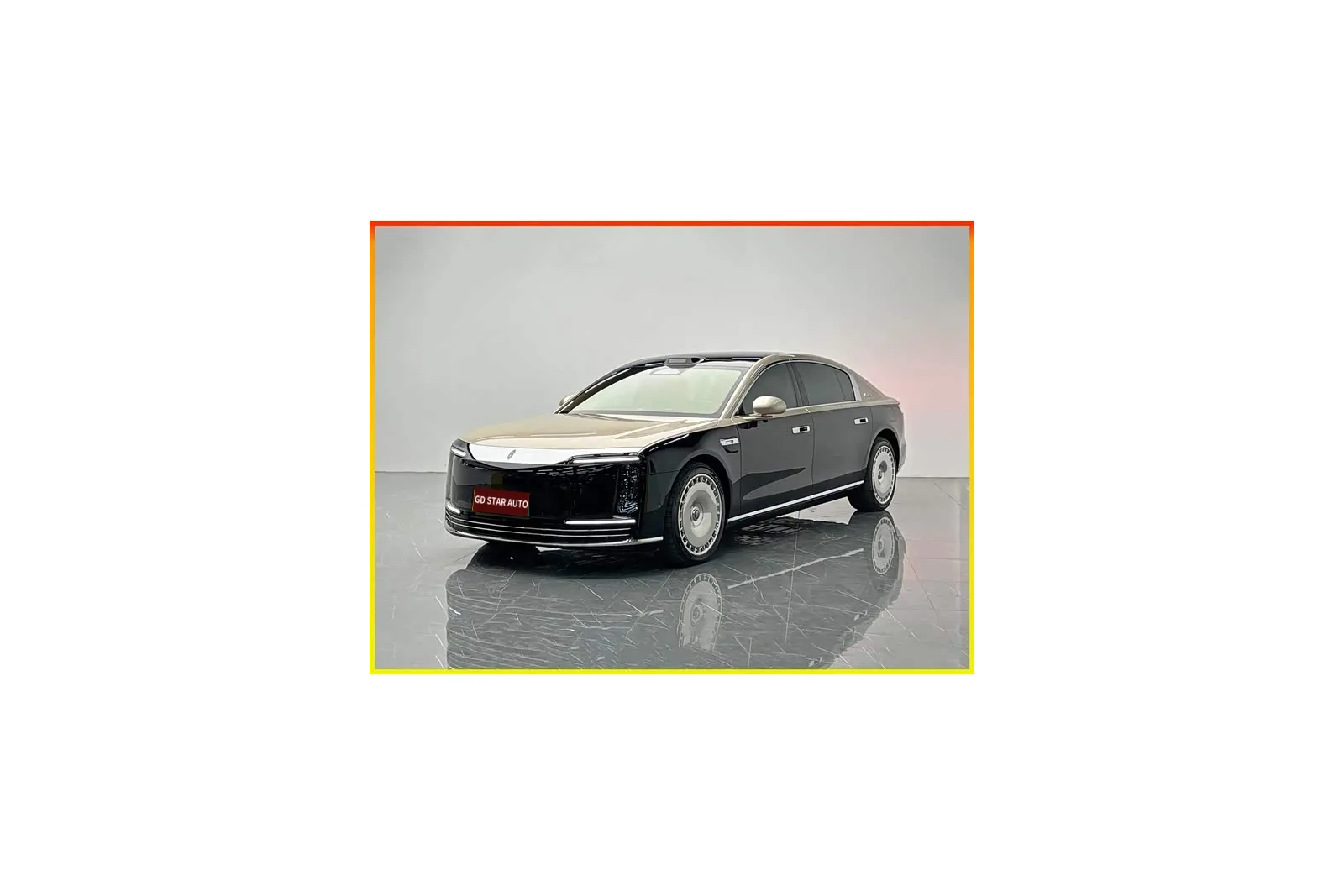
Maextro is the outlier. Built by JAC with Huawei's technology, the S800 is a 5,480 mm four-seat executive saloon aimed squarely at the Mercedes S-Class and BMW 7 Series, priced from RMB 728,000 to 1,388,000.
Against that, a Haval H6 starts around RMB 100,000 and a Tiggo 8 around RMB 110,000. The gap is real, and it explains most of the used-price spread: a three-year-old S800 still costs more than a new H6.
2. Build quality and comfort
The premium cars earn their price in materials that are expensive to fake. Nappa leather, open-pore wood, aluminium suspension components, double-glazed glass, 20-plus speaker audio, and in the Zeekr and Maextro cars, air suspension with road preview. NIO builds aluminium-intensive bodies on its larger models, which helps rigidity and crash performance but makes panel repair a specialist job rather than a panel-beater's afternoon.
Mainstream cars use soft-touch plastics, synthetic leather, steel suspension and smaller wheels. That is not the disadvantage it was five years ago. A current H6 or Tiggo 8 has a cabin that would have passed for premium in 2018, and the visible difference at a glance is smaller than the price gap suggests.
The difference that survives is in what you cannot see: sound insulation, bushing quality, seat frame rigidity, the calibration of the damping. After 100,000 km the premium car still feels tight and the cheaper one starts to rattle. If the buyer keeps cars for two years, that gap barely matters; if they keep them for eight, it is the whole argument.
3.Performance and range
The premium cars are genuinely fast. The dual-motor Zeekr 001 quotes 0–100 km/h in 2.83 seconds in its current form, against roughly 3.8 seconds for earlier versions. The NIO ET7 makes 480 kW, about 653 hp. The Zeekr 8X does 3.7 seconds in standard form and under three in its triple-motor trim. The S800, at 2,920 kg, still manages 4.7 seconds.
Mainstream models are unremarkable and entirely adequate: a Haval H6 with the 1.5T or 2.0T takes around nine to ten seconds to 100 km/h, and the smaller electric models — BYD Yuan Pro, Geely Geometry E — sit in the same region.
Range follows the same pattern. Premium electric cars quote 600 to 780 km on the CLTC cycle; mainstream electrics generally quote 400 to 500. But for an export buyer, the more relevant figure is charging: a 700 km claim built on a dense Chinese charging network does not transfer to a market with three chargers between two cities. In most export destinations a plug-in hybrid is the more useful premium purchase than a large battery-electric, because the engine removes the infrastructure question entirely.
4.Technology
The premium cars run a generation ahead. Qualcomm's 8295 chip, Zeekr OS, NIO's Banyan system with NOP+ navigation assist, lidar on the roof, augmented-reality head-up displays, and in the newest cars, air suspension that reads the road ahead. Maextro adds Huawei's entire ecosystem, which is the most advanced cockpit software any Chinese car carries.
Mainstream models carry competent L2 assistance, a 360-degree camera and a large central screen, usually on an older chip. The honest assessment is that the premium cars are one to two generations ahead in compute and sensors, and roughly level in what a driver can actually use outside China. Almost all of this software is calibrated for Chinese roads and Chinese mapping. In an export market the extra hardware often sits idle, which is an argument for buying the cheaper car if the buyer's priority is function rather than specification.
5.Resale value and repair costs
This is where the two groups diverge most, and where most published figures are unreliable.
The broad picture is well established. Chinese new-energy vehicles averaged a three-year residual value of about 44.5 per cent for battery-electric and 43.3 per cent for plug-in hybrid in 2026, against 52.7 per cent for combustion cars (China Automobile Dealers Association and Jingzhengu data). Electrification costs residual value, and the premium brands are electrified almost without exception.
Within that, the mainstream combustion models do better than the average. The Haval H6 has held around 55.5 per cent at three years, which puts it near the top of Chinese SUVs. The Zeekr 001 sits in the high fifties on some measures and around 58 per cent in the 25–40万元 electric class. A NIO ET5 is closer to 50 per cent. For reference, a Tesla Model 3 holds about 61 per cent, which remains the benchmark Chinese brands are measured against.
Three of the models in this article — the Zeekr 9X, the NIO ES9 and the Maextro S800 — have no meaningful three-year data, because they are too new. Their one-year figures look excellent: the 9X has reportedly topped 80 per cent in its class. That tells you almost nothing about year three. A car that launched into a queue and has never been discounted holds its price for twelve months; what happens when the facelift arrives and the factory starts discounting is a different question, and it is the one that matters to a used buyer.
The practical consequence is a genuine opportunity. A three-year-old premium Chinese car may have lost 45 per cent of its value, but 45 per cent of a 600,000 yuan car is a much larger sum than 45 per cent of a 120,000 yuan car. In absolute terms, the premium buyer absorbs most of the depreciation and the second buyer captures it.
Repair costs run the other way. As an indication from Chinese dealer pricing, a single air spring unit for a Zeekr runs USD 1,500 to 2,000 per corner, a lidar unit around USD 800, and a NIO battery pack is a five-figure item if it fails outside warranty. A Haval headlamp assembly is USD 200 to 300. These are indicative rather than quoted figures and vary by market, but the ratio is the point: premium running costs are three to eight times mainstream on the parts that actually break.
The deciding factor for an exporter is not the brand but the parts channel in the destination country. A mainstream Chinese car in a market with an independent parts trade is serviceable anywhere. A premium Chinese car with air suspension and lidar, in a market with no dealer, turns every fault into an import. Source: https://auto.sina.cn/2026-08-16/detail-ininmxrx1762481.d.html
Questions buyers ask most
How should I choose between a premium Chinese used car and a mainstream Chinese used car?
The choice depends on your budget, driving needs and expectations for comfort and technology. Premium Chinese used cars, such as Li Auto, Zeekr, Voyah and Denza, often offer more advanced features, better interior materials and a higher level of comfort. Mainstream brands, such as Chery, Geely, Haval and Changan, are generally more practical choices for daily driving, with a focus on affordability, reliability and value for money.
Which one to choose
For dealers focused on short-term resale, prioritizing mainstream models is a safer business strategy. Vehicles such as the Haval H6, Chery Tiggo 8, BYD Song PLUS, and Jetour X70 offer transparent pricing, affordable parts, and strong market demand—requiring little effort to explain to potential buyers. While the profit margin per vehicle may be smaller, the high turnover rate and limited downside risk make them an attractive choice.
For buyers planning long-term ownership (five years or more) who also have access to a reliable supply of spare parts, high-end models that are two to three years old often provide the best value. These vehicles have already passed their period of steepest depreciation and generally feature superior build quality; provided there are no structural defects, daily operating costs remain well within a manageable range. Potential risks are primarily concentrated in components like air suspension, batteries, and sensors—areas that should be the focus of any pre-purchase inspection, rather than just checking the condition of the paintwork.
For buyers who prioritize brand prestige, manufacturer warranties, and software support, purchasing a new vehicle through official channels is recommended. Opting for "parallel import" models—such as the S800 or ES9—that lack local dealer support can lead to an awkward situation: you end up bearing the high operating costs of a premium vehicle without the benefit of the service and support that should come with it.
Regardless of your buyer profile, one rule remains essential: before finalizing any purchase, always verify that there is a reliable supply of spare parts and access to the necessary diagnostic software. The quality of a vehicle ownership experience often depends on whether there is a nearby repair shop capable of reading its specific diagnostic trouble codes (DTCs).
If you are undecided between several models, please provide the specific vehicle makes, model years, quantities, and your destination city. We offer free quotes and consultations. Our "Used Car Procurement" page outlines our vehicle selection process, while our brand-specific pages for NIO, Zeekr, and Maextro detail the models currently available. Data verified as of: November 25, 2026. The content covered includes: semi-annual export data from the China Association of Automobile Manufacturers (CAAM); export value data provided by Gasgoo; three-year residual value data from the China Automobile Dealers Association (CADA) and Jingzhengu; residual values for the Haval H6 and Zeekr 001; specifications for the Zeekr 8X and Maextro S800; and launch information for the NIO ES9.
GD Star Auto is an automotive export and procurement platform operated by Yuezhixing (Guangzhou) Investment Development Co., Ltd. Prices, specifications, and residual values are subject to market fluctuations; maintenance cost data is provided for reference only, and specific figures should be verified based on the particular vehicle model and destination. This document is intended for general reference purposes only and does not constitute a formal price quote.